
This post may contain affiliate links. Please see our disclosure policy.
Peony jelly turns those big, fragrant garden blooms into a soft, floral preserve you can spread on toast and scones long after the flowers have dropped. It’s a lovely way to hang onto a little of late spring, and a fun surprise on a cheese board or tucked into thumbprint cookies.
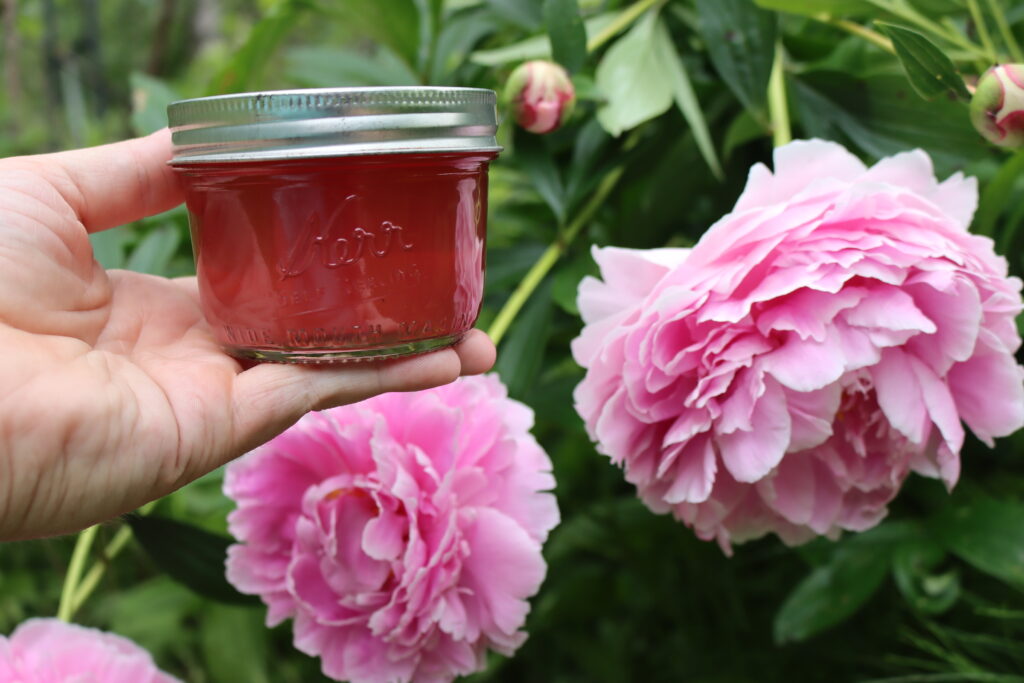
Table of Contents
- Notes from My Kitchen
- Quick Look at the Recipe
- What Does Peony Jelly Taste Like?
- Choosing and Preparing Peony
- Ingredients for Peony Jelly
- Low Sugar Options
- How to Make Peony Jelly
- Canning Peony Jelly
- Altitude Adjustments
- Ways to Use Peony Jelly
- Peony Jelly FAQs
- Flower Jelly Recipes
- Peony Jelly Recipe
- Jelly Canning Recipes
This recipe has been reviewed for safety and accuracy by a Master Food Preserver certified through the University of Cornell Cooperative Extension.
Peonies put on a show for a week or two and then they’re gone, so turning some of those petals into jelly is a way to stretch the season out a little. The petals are edible, with a gentle flavor that lands somewhere near rose and honey.
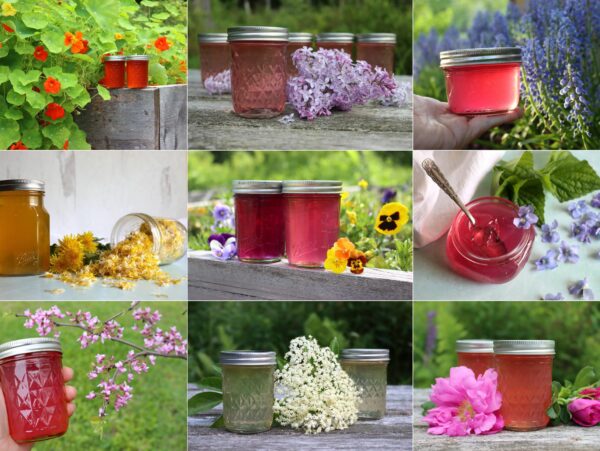
If you’ve made other garden flower jellies, the method will feel familiar. It runs almost exactly like tulip jelly or lilac jelly: steep the petals into a fragrant tea, set it with pectin and sugar, and add a little lemon juice for balance and safety.
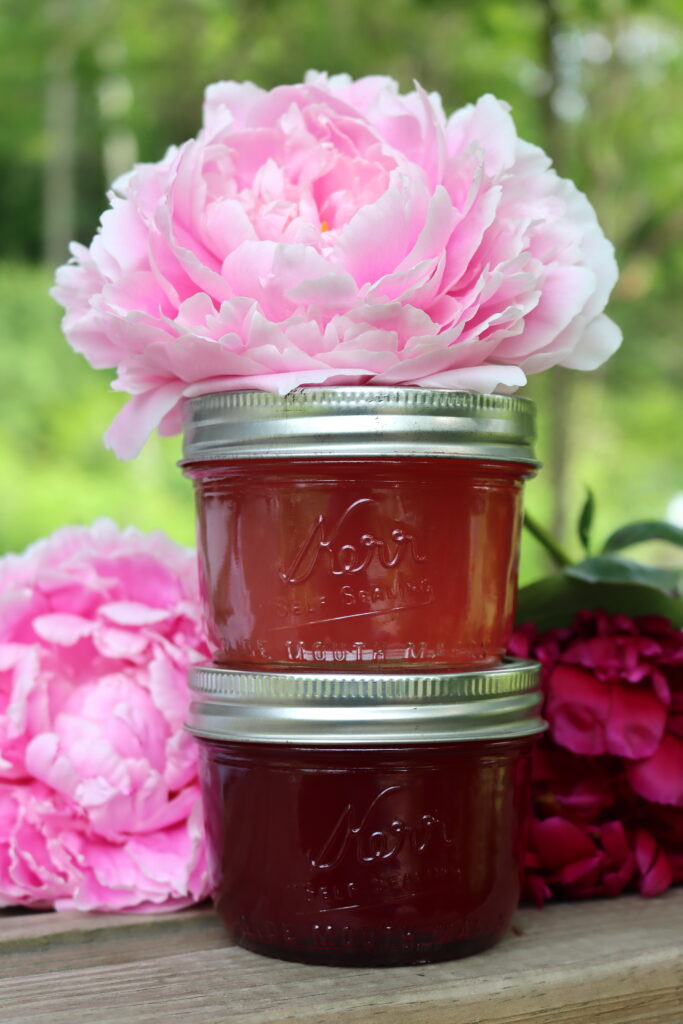
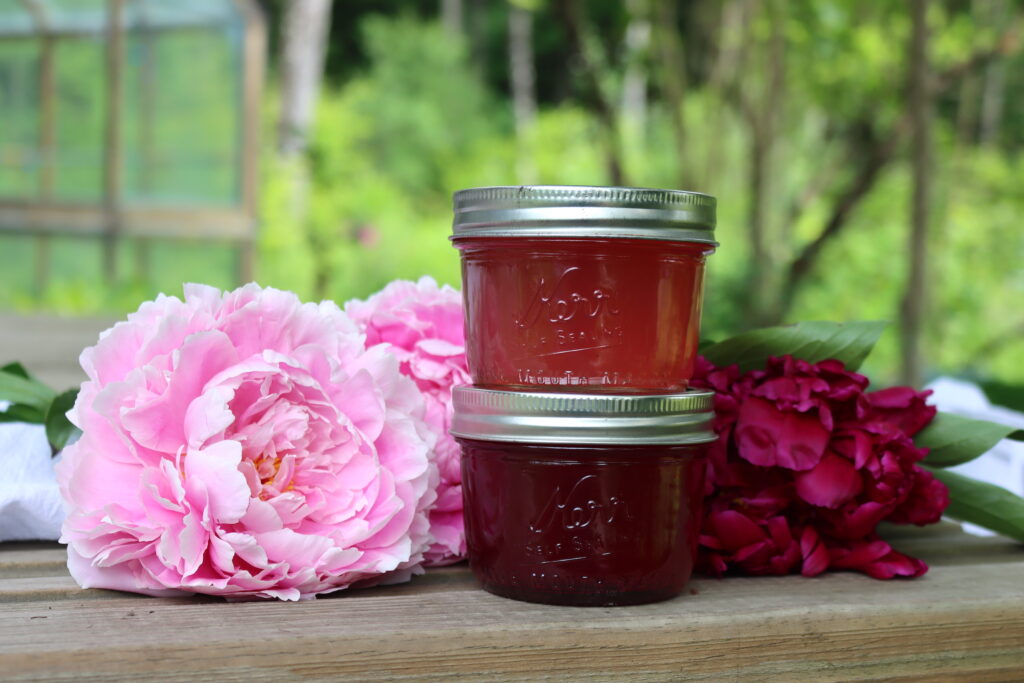
The color of the finished jelly follows the petals you pick, so a batch of deep red peonies sets up darker than one made from pale pink blooms.
Notes from My Kitchen

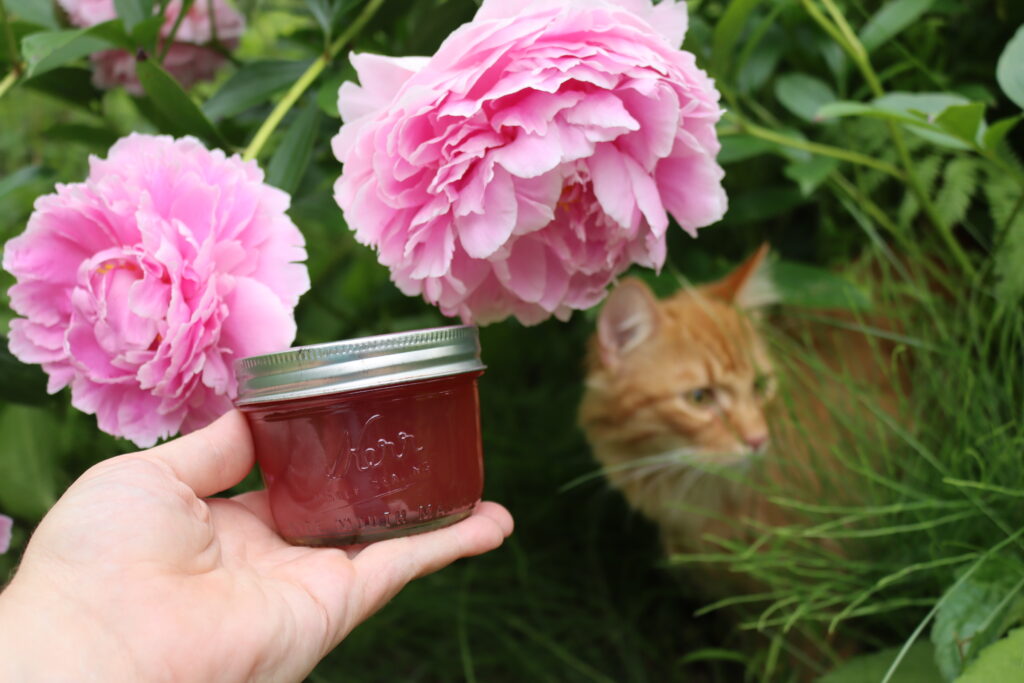
Those first puffy pink peony blossoms mark the true beginning of summer here in Vermont. My first summer here, I dried a bundle of them and put them on my dashboard, and it perfumed my car all summer. My boyfriend (now husband) thought it was hilarious, but I loved the smell so much that it was worth his gentle jibes.
When I started making floral jellies with my kids, I knew I had to capture that wonderful aroma in a homemade jelly. Every peony smells (and tastes) a bit different, so make a quick batch of tea with your petals first, add a bit of sugar, and test them before committing to a whole batch. All of ours are pretty good, but flowers are much better than others.
Quick Look at the Recipe
- Recipe Name: Peony Jelly
- Recipe Type: Flower Jelly Recipe
- Canning Method: Water Bath Canning
- Prep/Cook Time: 30 Minutes (including steeping)
- Canning Time: 10 Minutes
- Yield: 5 to 6 half-pint jars
- Jar Sizes: Quarter Pint, Half Pint, or Pint
- Headspace: 1/4 inch
- Ingredients Overview: Peony petals, water, lemon juice, sugar, and pectin
- Difficulty: Easy! You’re basically making a floral tea and setting it with pectin.
- Similar Recipes: The process is very similar to other edible garden flower jellies, including Tulip Jelly, Pansy Jelly, and Rose Petal Jelly. If you grow a few flowering shrubs too, it’s worth looking at Lilac Jelly and Forsythia Jelly.
What Does Peony Jelly Taste Like?
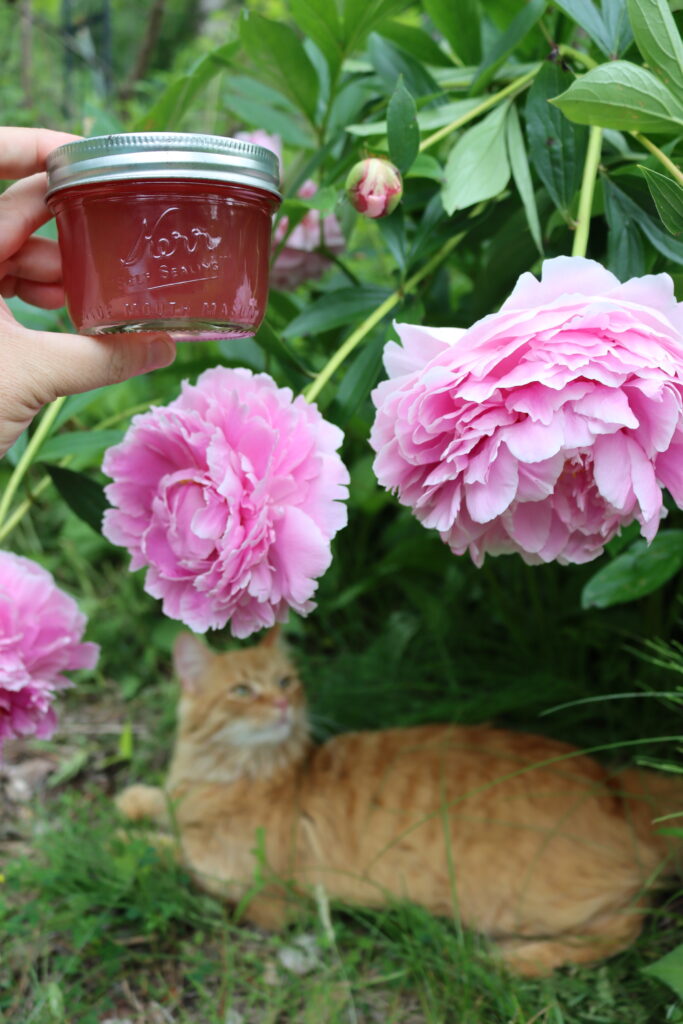
Peony jelly tastes soft and floral, with notes that read like roses and honey and just a touch of something close to lavender. The sweetness is gentle rather than heavy, so it sits more on the delicate end than a bright fruit jam. That makes it a nice match for warm biscuits, mild cheeses, and butter on a scone.
Because the flavor is on the subtle side, it rewards the most fragrant blooms you can find. A strongly scented peony carries far more flavor into the jar than one that’s pretty but mild, so let your nose do the picking. As a rule, the jelly tastes about the way the petals smell.
The color compounds also lend a lot of flavor to the mix, so try separate batches with different colors to create different flavor variations.
Choosing and Preparing Peony
Peonies are grown mostly for their big, frilly blooms, but the petals are edible too and carry that soft, rose-like flavor through into jelly. The common garden peony (Paeonia lactiflora) blooms in pinks, reds, and whites, and any of those colors will work. Color carries through to the jar, so darker red petals give a deeper-toned jelly while pale pinks set up a soft blush.
Use petals from plants you know haven’t been sprayed, which usually means your own garden rather than florist or nursery stock, since ornamental peonies are often treated with chemicals not meant for eating. Only the petals go into the jelly, so discard the stems and green centers, and pinch off the pale heel at the very base of each petal, which can taste bitter.
Pick blooms that are fully open and at their most fragrant, ideally on a dry day. Give the petals a quick rinse to clear out any insects before you steep them. You’ll need 2 to 4 cups of loosely packed petals for a batch, depending on the size of your flowers.
Ingredients for Peony Jelly
Peony jelly uses the same basic formula as other flower jellies: fresh edible petals steeped into a tea, then set with sugar, pectin, and a bit of lemon juice for balance and safety.
- Peony Petals: Pink, red, and white garden peonies all work, so use one color or a mix. Reach for your most fragrant blooms, since flavor follows scent, and use only the petals (no stems or green parts).
- Water: Use clean filtered water if your tap has a strong chlorine taste, since that can muddy the delicate peony flavor.
- Lemon Juice: The lemon juice does a few jobs at once. It tempers the sweetness so the floral notes come through, it helps the pectin set, and it lowers the pH enough to make the jelly safe for canning. Use bottled lemon juice, which holds a steady acidity that fresh lemons don’t. For a more neutral flavor you can swap in citric acid powder at about 1 teaspoon in place of the 1/4 cup of lemon juice.
- Sugar: Regular powdered pectin needs a good amount of sugar to gel, so this recipe follows the current Sure Jell ratio of 5 cups sugar to 4 cups of peony tea for an old-fashioned jelly that sets dependably. If you’d rather cut the sugar back, there’s a lower-sugar option in the note just below.
- Pectin: This recipe is built around regular powdered pectin, such as Sure Jell, which is reliable and gives a consistent set.
Low Sugar Options
If you’d prefer a less sweet jelly, reach for Sure Jell low sugar pectin instead and drop the sugar to as little as 1 to 2 cups. With Pomona’s Universal Pectin, bump the lemon juice up to 1/2 cup, since Pomona’s doesn’t include the added citric acid that most other pectins do.
Pomona’s is a 2-part low-sugar pectin that comes with calcium water and behaves a little differently, so follow the mint jelly directions on the box. If it’s your first time using it, it’s worth reading through how to use Pomona’s pectin first.
How to Make Peony Jelly
Making peony jelly runs like any other flower jelly. You steep the petals into a tea, set it with pectin and sugar, and add lemon juice along the way. Don’t skip that lemon, since it balances the sweetness, helps the set, and lowers the pH enough to keep the jelly safe on the shelf, so it goes in even if you’re not canning.
Most of the time here is hands-off while the petals steep, so have your jars and lids ready before you start. That way you can move quickly once the jelly comes up to its boil.
Prepare the Peony Petals
Pull the petals from 2 to 4 cups’ worth of fresh peony blooms, depending on the size of your flowers, and set aside the stems and green centers. Pinch off the pale base of each petal, where the flavor can run bitter.
Give the petals a quick rinse to wash out any insects. Fully open, fragrant blossoms carry the most flavor, so pick at peak bloom on a dry day if you can.
Make the Peony Tea
Bring 4 cups of water to a boil and pour it over the petals in a heatproof bowl or jar. Push them down so they’re fully submerged, then let them steep for 15 to 20 minutes. The water will take on a soft pink or lavender tint and smell strongly of peony.
Strain out the spent petals, pressing gently to draw off all the liquid, and measure the tea. You’re aiming for about 4 cups. If you come up a little short, top it off with water to bring it back to 4 cups.
Add Lemon Juice and Pectin
Pour the peony tea into a jelly pot and stir in 1/4 cup of lemon juice. (The lemon balances the sugar, helps the pectin set, and makes the jelly safe to can, so don’t leave it out even if these are headed for the fridge.) Bring the mixture up to a boil over medium-high heat.
Once it’s boiling, whisk in one box of powdered pectin until it’s completely dissolved, and let it boil hard for 1 full minute. The pectin goes in before the sugar, which is what lets the jelly set, so hold that order.
Add the Sugar
After that minute, add 5 cups of sugar all at once. (Do not add the sugar before or at the same time as the pectin, or the jelly won’t set up.) Stir until the sugar is completely dissolved.
Bring the jelly back to a full rolling boil for exactly 1 minute, then pull it off the heat and skim away any foam with a spoon. Immediately ladle the hot jelly into prepared jars, leaving 1/4 inch headspace.
Canning Peony Jelly
Canning is optional. If you’d rather not, let the jars cool completely on the counter and tuck them into the refrigerator for a few weeks, or the freezer for up to 6 months in freezer-safe jars.
For shelf storage, I like to run the jars through a water bath canner so the jelly keeps at room temperature year-round. Make sure you’ve used the full amount of lemon juice, since that acidity is what makes water bath canning safe. Have your canner, jars, and lids prepped before you start the jelly. After ladling into jars (leaving 1/4 inch headspace), wipe the rims with a clean, damp cloth, set the lids, and tighten the bands to fingertip tight.
Process in a boiling water bath canner for 10 minutes, adjusting for altitude as needed. Let the jars cool undisturbed on a towel for 24 hours, then check the seals. Refrigerate any that didn’t seal and use them first. Properly canned and sealed jars will maintain quality on the pantry shelf for 12 to 18 months. Refrigerate after opening.
Altitude Adjustments
For water bath canning, processing times increase at higher elevations:
- 0 to 6,000 feet: 10 minutes
- Above 6,000 feet: 15 minutes
Ways to Use Peony Jelly
Peony jelly is delicate, so it shines anywhere its soft floral note won’t get buried. Spread it on warm toast, biscuits, or scones, swirl a spoonful into plain yogurt, or use it as the filling for thumbprint cookies and layer cakes. It also pairs nicely on a cheese board next to a mild brie or a soft goat cheese.
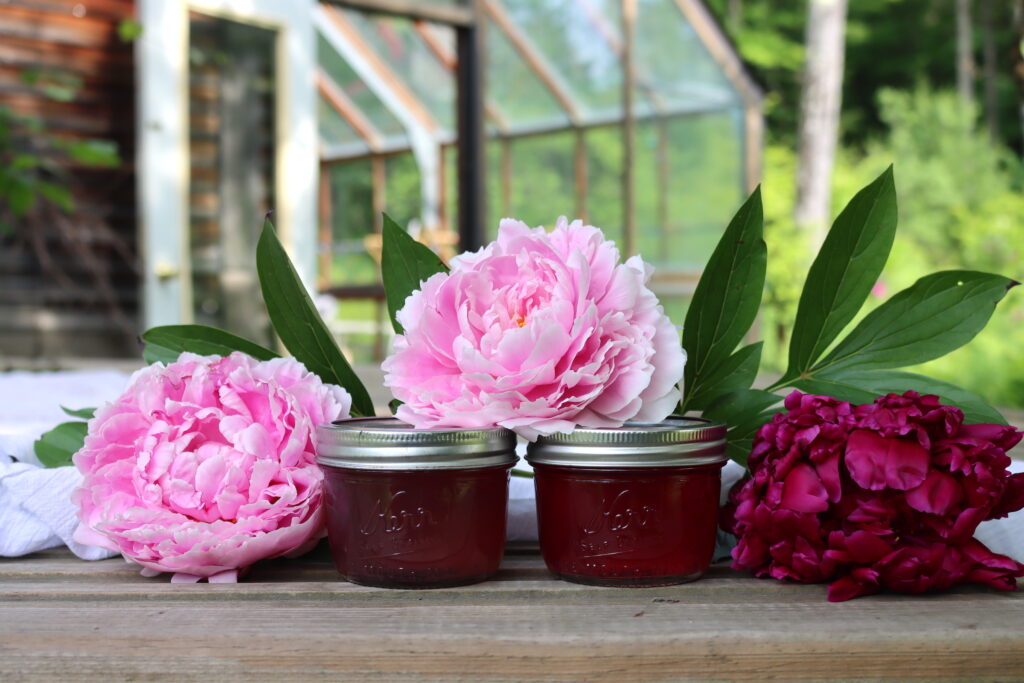
Since the color tracks the petals you pick, a few jars in shades from blush to deep rose make a pretty gift, especially in late spring when peonies are the talk of the garden. A jar tied with a ribbon is a nice thank-you for whoever let you raid their peony bed.
Peony Jelly FAQs
Yes, peony petals are edible and are the part used for jelly. Use only the petals, not the stems, foliage, or roots, and pick from plants you know haven’t been sprayed. Florist and nursery peonies are often treated with chemicals, so your own garden blooms are the safest bet.
The most fragrant blooms give you the most flavor, since the jelly tastes about the way the petals smell. Color is up to you, and it carries through to the jar, so deep red petals make a darker jelly while pale pinks set up a soft blush. Common garden peonies (Paeonia lactiflora) in any color all work.
The most common reasons jelly doesn’t set are adding the sugar at the same time as the pectin (add pectin first and boil for 1 minute before adding sugar), boiling the finished jelly for too long (over 5 minutes), or trying to double the batch size. If it doesn’t set after 24-48 hours, enjoy it as a floral syrup or read through my guide on troubleshooting jelly set.
Yes, but you’ll need to use a low-sugar pectin like Sure-Jell Low Sugar or Pomona’s Universal Pectin and follow the package instructions for mint jelly. If you use Pomona’s, increase the lemon juice to 1/2 cup, since it doesn’t contain the added citric acid that other pectins do. The yield will be lower with reduced sugar.
Flower Jelly Recipes
If you tried this Peony Jelly recipe, or any other recipe on Creative Canning, leave a ⭐ star rating and let me know what you think in the 📝 comments below!
And make sure you stay in touch with me by following on social media!
Peony Jelly
Equipment
- Canning Jars, Lids and Bands
Ingredients
For the Peony Tea
- 2 to 4 cups fresh peony petals, petals only, no stems or green parts
- 4 cups water
For the Jelly
- 4 cups peony tea, strained
- 1/4 cup bottled lemon juice, or 1 teaspoon citric acid
- 1 box powdered pectin, 1.75 oz, regular, such as Sure-Jell original, 6 Tbsp if bulk pectin
- 5 cups granulated sugar
Instructions
- Pull the petals from the peony blooms and discard the stems and green parts. Pinch off the bitter pale base of each petal and give them a quick rinse.
- Bring the water to a boil and pour it over the petals, pushing them down until fully submerged. Steep for 15 to 20 minutes.
- Strain the tea through a fine mesh strainer, pressing gently on the petals. Measure the strained tea, adding water if needed to reach the full amount called for.
- Pour the peony tea into a large pot and stir in the lemon juice. Bring to a boil, then whisk in the powdered pectin until completely dissolved. Boil hard for 1 full minute.
- Add all the sugar at once and stir to dissolve. Return to a full rolling boil and boil hard for exactly 1 minute, then remove from heat and skim off any foam. (Do not add the sugar before or with the pectin, or the jelly won’t set.)
- Ladle hot jelly into prepared jars, leaving 1/4 inch headspace. Wipe rims clean, center lids, and apply bands fingertip-tight.
- Process in a boiling water bath for 10 minutes, adjusting for altitude. Turn off the heat and let jars rest 5 minutes before removing. Cool undisturbed 12-24 hours before checking seals.
Notes
Nutrition
Nutrition information is automatically calculated, so should only be used as an approximation.
Jelly Canning Recipes
Find the perfect recipe
Searching for something else? Enter keywords to find the perfect recipe!

I love this jelly! This will be my second year making and selling it at farmers’ markets. Folks are stunned to learn peonies are edible — and delicious!
I know you mention storing the tea in the fridge for a couple of days. I’m wondering if there are longer-term storage options, since I aim to make this in quantity and at the same time other wonderful jell-able flowers are blooming!
Can I:
– waterbath can the tea after the lemon juice has been added and then make the jelly later?
– dehydrate the flower petals to extract later?
Please let me know if you’ve experimented with these options.
By the way, I use a number of your recipes. They’re fun and reliable! Thank you!
I haven’t experimented with making these in quantity or delay batching, but my best guess would be that if you made the flower tea immediately with the fresh and fragrant blossoms and lemon juice added, and then froze the strained tea, you’d get the most flavorful result and best color.
The flavor of this recipe can be really variable, depending on your peonies. All the batches I’ve made taste lightly floral and like spring berries, but the intensity of the flavor can vary quite a bit based on the flowers. Flowers with more fragrance will have more floral flavor, and I’ve noticed that flowers with more and darker red tones have more berry flavor. All, thus far, have been absolutely delicious!